
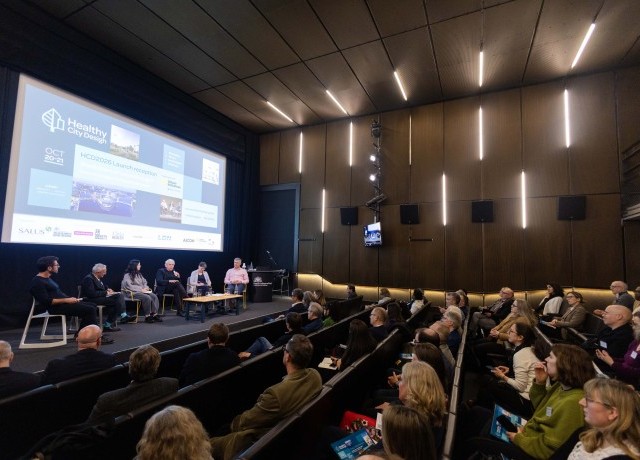
HCD2026 Launch reception: Breakdown or breakthrough? New strategies for healthier cities
Many of the leading lights in public health, urban planning and design of the built environment descended on the Royal College of Art in London this week to mark the official launch of the Healthy City Design 2026 Congress and Call for Papers.
Prof Jeremy Myerson, academic director and co-founder of the Healthy City Design Congress, explained how the main theme of this year’s Congress, ‘Breakdown or breakthrough? New strategies for healthier cities’, is “deliberately double-edged”.
He said: “Cities around the world, we know, are operating today in difficult conditions. Economic uncertainty, geopolitical turbulence, climate fragility, the migration debate, social divisions, and health inequalities have combined to create a fraught urban agenda. A perfect storm, which is unprecedented. Faced with so many pressures that could fracture the urban system, if left unchecked, it would be easy to deprioritise the role of health in making our cities greener, fairer and more inclusive for citizens.
“But that would be a mistake. Far from being a sideshow to urban development, the healthy city is central to it. Healthier cities and healthier citizens provide a gateway to stronger climate resilience, improved economic productivity and greater social cohesion. If we want to avoid urban breakdown, then we need those breakthrough ideas that create healthier cities.”
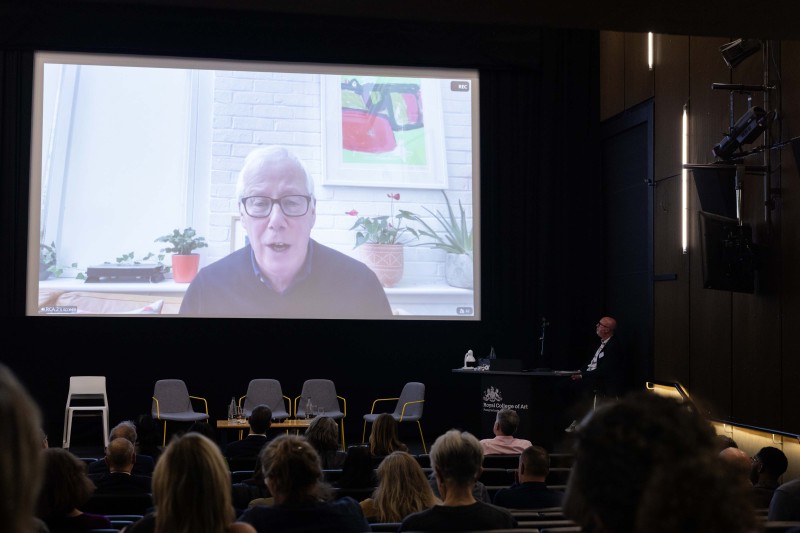 Prof Jeremy Myerson, academic director and co-founder of the Healthy City Design Congress, introducing the Call for Papers
Taking a strategic approach
Presenting on some of the recent work carried out by the World Health Organization (WHO) in this space, Dr Nathalie Roebbel, WHO lead on urban health, underlined the need for a strategic approach to urban health if large and lasting impact is to be achieved, particularly given the demographic and population growth challenges presenting to cities.
“We have urban populations that are larger and growing,” she said. “Most people, as we have seen, are urban dwellers. But I think what is more important is to observe that slums remain too large and are still growing. One in four urban dwellers today actually live in informal settlements. And this figure will increase and may triple by 2050.”
She went on to emphasise that health risks and opportunities are still very unequally distributed, pointing to a map of nearly 18 years difference in female life expectancy across Santiago de Chile.
“Different health challenges are very much interlinked, and health is also linked to challenges in many other sectors,” she said. “When we act in a siloed, short-term and fragmented way, we can’t actually achieve the best outcomes. And strategic action will allow us to achieve the full potential of cities and how they can impact health and other societal goals.”
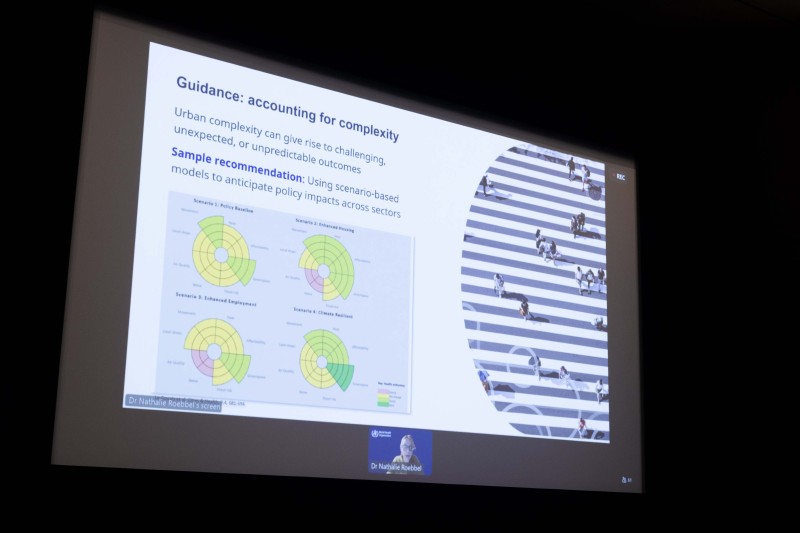 Dr Nathalie Roebbel, WHO lead on urban health, underlined the need for a strategic approach to urban health
She defined a strategic approach as a situation where every action works in harmony with all others to support progress towards an objective, and such actions need to be integrative and contextualised. Many ideas are not new, she remarked, but they need to be applied and brought together to achieve urban health more broadly. Leading the WHO to develop a strategic approach to urban health as well as key recommendations for action, compiled within a new guide, Dr Roebbel noted that in respect of health, the health agency needs to position itself in a complex world, seeing the issue in relation to climate change, migration, and health security. There is also the need to identify key entry points that will persuade institutions, organisations and individuals to take a strategic approach to urban health.
Establishing enabling frameworks will allow us to bring all this together, she said, and where possible, adopt comprehensive strategies. “Every city might have different priorities for political reasons, for geographic reasons – and, actually, we can use them as an entry point to address health. A very simple recommendation would be to document and track local cross-cutting initiatives that are relevant to urban health and then use them as a way to address health and global health more broadly.”
With the need also to identify the best means of implementation, the strategic guide has been highlighting relevant approaches to governance, financing, data analytics, innovation, partnership and participation, which Dr Roebbel described as “fundamental pathways to help translate all those sectorial interventions and all that data we have into very practical approaches”.
In addition, the WHO plans to create implementation protocols that would enable the development of simple but actionable local action plans for health. “If we want to take a strategic approach to urban health, we need a number and series of ecosystem products that will help us be more successful,” Dr Roebbel said. “One is training. There is no doubt that we need to train both health and non-health professionals about core urban health knowledge but also about core capacities that are necessary in order to be implementing intersectoral policies for health. And we need to document what works.”
Governance and long-term stewardship
Following Dr Roebbel’s presentation, a panel of multidisciplinary thinkers and practitioners shared their insights on the topic in a discussion chaired by Sunand Prasad, principal at Perkins&Will architects. Director of LSE Cities Ricky Burdett stressed the importance of governance, asserting that while many of the big issues such as climate change and inequality can improve health, having a mechanism that can actually deliver change on the ground is essential. For Burdett, change is best implemented by a directly elected mayor with the necessary powers to push through policy.
Using the example of New York City and London, he reflected on how the former had only implemented a congestion charge scheme in January last year – a policy hampered by the fact that the city mayor has no control over transport, which is the responsibility of the Metropolitan Transportation Authority. By contrast, it was easier for London to introduce the Ultra Low-Emission Zone (ULEZ), in part because the mayor is also chair of Transport for London.
“Going against the sort of populist feel that we mustn’t stop traffic around the edges of the city, what has happened is that . . . children are no longer exposed to 80 per cent of [polluted air], and it shows not just leadership but that you can do something.”
He also pointed to the example of Bogotá, Colombia, where the mayor at the time, Claudia Lopez, implemented a programme called Care Blocks, which provides services that improve health for women who would normally be stuck at home being carers of small children or elderly parents. Cycling provision is also available for grandmothers, many of whom have never cycled before, and this has had a hugely positive impact on their wellbeing.
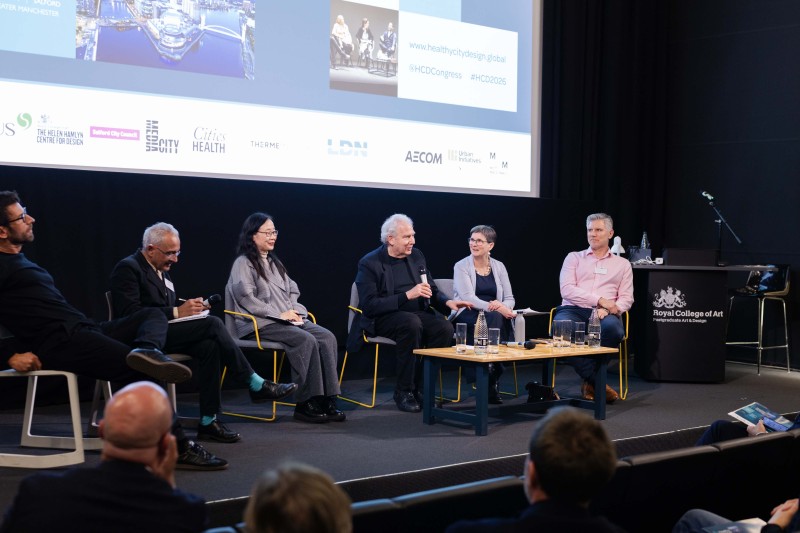 Director of LSE Cities Ricky Burdett speaking as part of the multidisciplinary panel
Chris Scott, a development director at Muse in London, spoke about the urban regeneration firm’s focus on creating healthy places and sustainable local communities. He explained that “before we even put a pen to paper or instruct a masterplan architect to put pen to paper, we make sure that we fully understand the social priorities and the social needs of the community with whom we’re partnering. And that's because, at the end of the day, we’re effectively a ‘developer trader’.
“I don't like that that term, but what that basically means is that after the last home or last commercial building is sold, our legal responsibility is finished. However, we come from a long-term stewardship perspective and aim to make sure that we create places that we and the local community can be proud of for generations to come. We have to make sure that we’re delivering what is right for the community.”
Giving an example of a ten-acre project in Slough, he pointed out that a child born in the town today has a life expectancy of seven years fewer than a similar child born in the neighbouring borough of Windsor and Maidenhead. “That’s an amazing statistic,” he exclaimed. “We really are getting at the outset of the masterplan process, and we’ll get to grips to understand what we can do at a planning level to change that dynamic. That could be making sure that we have the right green infrastructure in our projects, making sure we have the right spaces that everybody can enjoy, not just the people who live there. But for those people who do live there, making sure that the homes and the offices we deliver are really best in class in terms of quality and healthy places to be.”
Awareness, toolkits and management
Jo Bibby, director of health at the Health Foundation, underlined the need to raise awareness about the wider determinants of health and health inequalities, as well as provide the practical approaches and tools that people can use to effect change. On the awareness-raising front, she highlighted the charity’s Health Equals campaign, which uses creative ways to bring to life “both the extent of inequalities and what drives them”.
She continued: “We also do a lot of analysis, a lot of data analysis. So, we have something called the Evidence Hub, where you can go on our local government dashboard and look at all sorts of metrics around factors that shape people’s health – whether it’s poverty, employment, housing standards, and so on – and look at that local authority level.”
On the practical side, Bibby picked out the Foundation’s funding programme, ‘Economies for Healthy Lives’, involving five places around the UK. She explained: “What we wanted to do through that was get better joint working across public health departments and economic development teams to think about how they shape the economic environment of their places with a view to improve health.”
One of those five places was Glasgow City Region, which developed a toolkit to help conduct health impact assessments of capital infrastructure investments. Called the Capital Investment Health Impact Assessment (CHIA) toolkit, the approach was used in the development of part of the Clyde Metro infrastructure. It encouraged the authorities to think about the ticket pricing and how it could be made accessible; about using stations as community hubs; and about joining up with active travel, so that bike racks are situated near the station.
“Through doing that, what they’ve developed is this toolkit where you could take on any infrastructure development to think about what the health impacts might be,” Bibby said. Another set of resources she highlighted was a health-in-all-policies toolkit developed with the West Midlands Combined Authority to support mayoral regional authorities, which, she explained, “focuses on things around the governance and accountability that you need”.
Pete Gladwell, group managing director on public-sector investments for pensions and financial services company Legal & General (L&G), commented how health inequalities is a really nascent area for the investment industry. “Everyone will talk a good game about the environment, regardless of whether they’re doing anything or not. But health inequalities is an area where most investors wouldn’t even know what it meant let alone be doing anything about it.”
He acknowledged the importance of the design of buildings, places and green spaces early on in a project, but he also underlined the need to design in the management to enable health inequalities to be reduced on an ongoing basis.
At L&G, which owns 10,500 social and affordable homes, all its residents are offered the same mental health services, access to the same helplines, the same quality of supports, etc, on a pro bono basis, that L&G staff receive. The aim is to provide support as well as design in some of the factors that can help address the wider determinants of health and address such issues as damp and mould in homes.
When we act in a siloed, short-term and fragmented way, we can’t actually achieve the best outcomes


Barriers and obstacles
Touching on some of the barriers that need to be overcome to create healthier places, Prof Hua Dong, director of the Helen Hamlyn Centre for Design, co-organiser of the Healthy City Design Congress, described the Centre’s perspective as bottom-up. She highlighted Christopher Alexander’s “Pattern Language” – a well-known architecture book providing 253 human-centred, adaptable design patterns for creating, improving, or building spaces at all scales – from regional towns to rooms and building materials.
“You can look at those patterns that scale to a living room to a piece of furniture,” she said. “How do you design in a way that makes people feel comfortable? And a lot of those good designs take time to develop. My question is: we are developing so fast, especially with AI, so are we still going to have some pattern that is recognisable? Do we have that kind of good guidance in this fast-pacing society?”
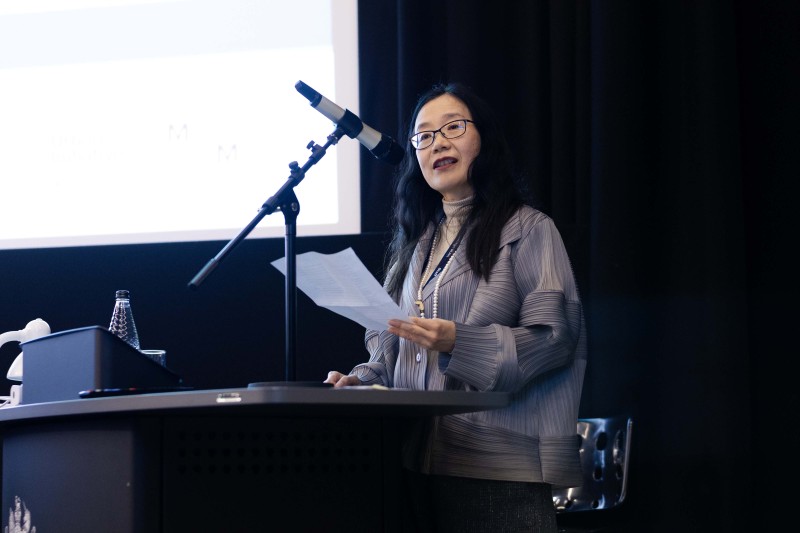 Prof Hua Dong, director of the Helen Hamlyn Centre for Design
Scott pointed to increased regulation as an obstacle for the development sector. While accepting the Building Safety Act was rightly introduced following the Grenfell Tower fire in 2017, he criticised the lack of forethought in terms of how it would impact the development system – “clogging it up for effectively a year”. He called for clearer guidance from regulators and better consultation during the development process.
Bibby argued that health impact assessments should be used to understand the consequences while accepting that there will likely be trade-offs.
She felt that one of the interesting pieces of legislation within the English Devolution in Community Empowerment Bill is a statutory duty on strategic authorities and mayors to “have regard” to improving population health and reducing health inequalities.
“I think these things on their own don’t achieve anything, but they put [issues] on the table, and it means it can start a conversation,” she said. “We would always want to strike the balance, but let’s start by having the conversation.”
As an investor organisation, Gladwell called for a greater understanding of the need for investment in a place and being able to partner with leaders who could help deliver that ambition. One example he raised was L&G’s work to fund the retrofit of 3000 social housing units in one borough. The project saw Gladwell, the borough’s leader, and their respective teams working together for a year to co-create the model to enable the retrofit work to take place.
He said: “That’s an amazing example of [the borough leader] knowing what would really improve the health of her residents and recognising it’s not something the public sector could or should fund by itself – but she could tap into socially minded investment to drive that ambition and make that change. But likewise, we, as an investor, needed her ambition and trust in us to have that impact as well.”
City trends
Asked how high up the mayoral agenda health was in regard to designing cities, Burdett gave a tempered response. “I would say that the trend of what’s actually happening out there is, number one, cities are sprawling,” he said. “They’re going completely in the wrong way. So, we can talk about place as much as we want. If we have a region that requires car dependency, what’s the point of creating nice, little public spaces in the middle of a new town, somewhere which is inaccessible by public transport?
“The second thing that is happening, unfortunately, is that most cities are becoming more unequal, as opposed to more integrated. And the third is that the spatial structure is becoming more fragmented. Put all those together, it’s the cocktail of horror.”
He added that effective strategies and ways to join up all the individual, positive initiatives into something that can really make a difference “remains very elusive”.
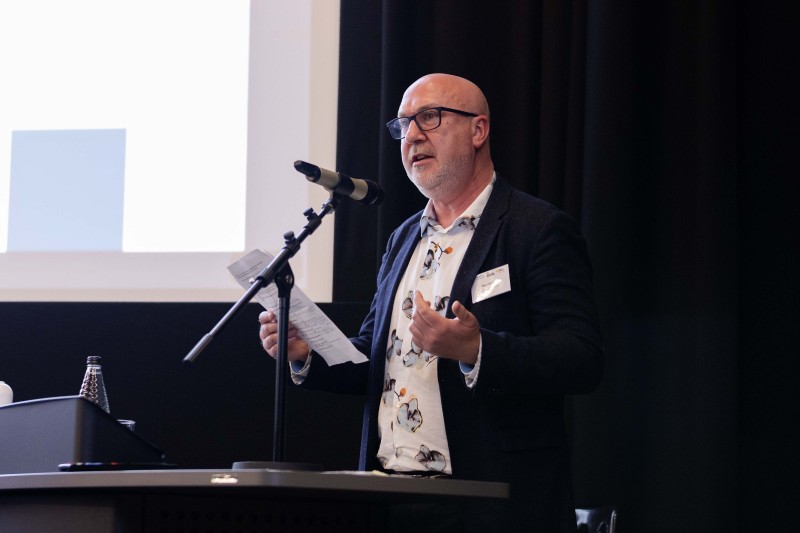 Max Farrell, chair of Healthy City Design
Concluding the panel debate and presentations, Max Farrell, chair of Healthy City Design, and founder and chief executive of the LDN Collective, said: “I don’t think anyone would disagree with the fact that we should all be living longer and healthier lives, but the reality is very different, and one statistic that really sticks in my mind is this: less than 7 per cent of funding goes towards preventive health, and 93 per cent or more goes towards treating people who are ill and ill health. These are all big structural problems that can only be solved by all the different people in public health, planning, investment, and development getting together and trying to do something about that, and creating healthier environments for everybody to live in.”
This year’s Healthy City Design International Congress takes place at Lowry, Salford, Greater Manchester, on 20-21 October 2026. Featuring as its plenary theme. ‘Breakdown or breakthrough? New strategies for healthier cities’, the Congress invites abstracts of 400 words to be submitted via the online form at www.healthycitydesign.global by 1 April 2026. More details can be found in the Call for Papers.
Event news
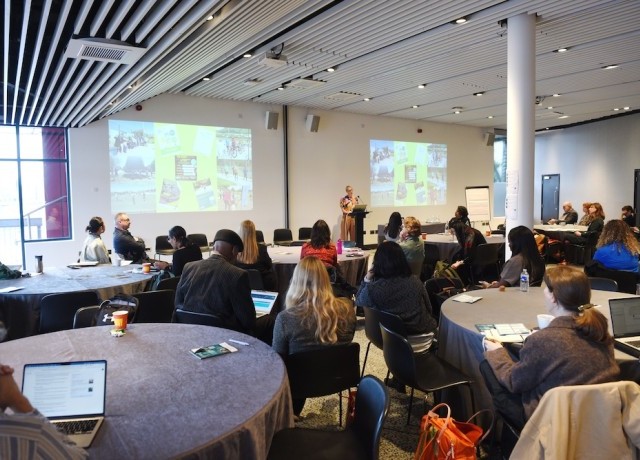

Actions to improve urban renewal and health equity
2nd September 2024
A vision for Liverpool: Putting people’s health first
2nd September 2024
Investing in urban renewal and health equity
21st March 2024
Health equity: Marmot Cities
20th March 2024