
Roundtables
Tuesday 20 October
Imagining the futures we want
12.30 - 14.00
Imagining the futures we want

Rob Delius
Associate director, head of sustainability, Stride Treglown, Plymouth, UK
Rob is an architect and sustainability lead at Stride Treglown. Rob is interested in pro-activism – how we collaboratively instigate action on climate, biodiversity and health.
He was the winner of the RIBA competition ‘Tomorrow's Garden City' and was behind 'Bath Wellbeing City', an initiative to reposition Bath as the UK's leading centre for wellbeing. He also co-produced a design guide, 'Health and wellbeing designed-in', in partnership with Avon and Wiltshire Mental Health NHS Trust.
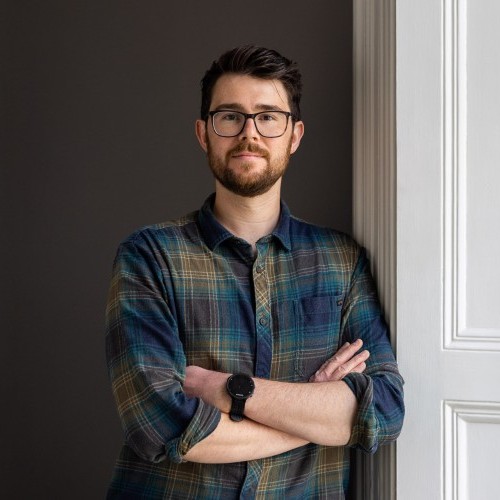
Tudor Jones
Associate director, urban designer, Stride Treglown, Bristol, UK
Tudor Jones is a dual-qualified urban designer (MRTPI and recognised practitioner in urban design) with over 15 years’ experience, specialising in urban regeneration and complex mixed-use projects for both the private and public sector. His work on the Newport Placemaking Plan, a long-term framework for the regeneration of Newport city centre to 2040, recently won a Pineapple Award for Strategy.
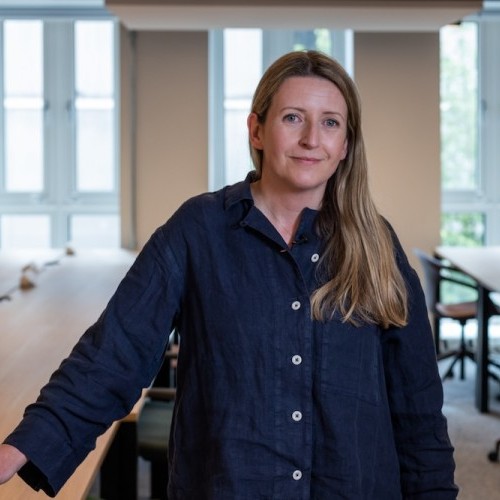
Eli Hatleskog
Social impact researcher, Stride Treglown, London, UK
Dr Eli Hatleskog is a social impact researcher at Stride Treglown and visiting research fellow at Central Saint Martins, University of the Arts London. Her work connects urban research, architectural design, and systems thinking, with a focus on collaborative creative practice. She is particularly interested in how research and design can bridge disciplinary silos and make the intangible dimensions of place more visible in decision-making. She co-edited 'Social value in architecture', contributed to the RIBA Social Value Toolkit, and received the 2020 RIBA President's Medal for Research.
Imagining the futures we want
Abstract Copy
Collective imagination holds the key to better futures.The question is not simply how we address the complex challenges we face but rather how we imagine futures worth creating. Environmental activist Rob Hopkins (2025) argues that we need to cultivate longing: visions of the future so compelling that people love them.Postwar, there was a belief that tomorrow would be better. We rebuilt towns and cities, imagined new forms of housing and public life, and reached for the moon.Today, we are surrounded by stories of crisis: the cost of living, economic uncertainty, conflict, biodiversity loss, climate change, declining high streets, pressures on public health, and rapid technological change.
Imagination is not an escape from reality; it is a way of seeing things differently, with curiosity and purpose. Places are continually made and remade through the stories we tell, the values we make visible and the actions we take together. Collective, creative imagination allows us to see possibilities yet to be realised. It creates shared purpose, builds confidence and opens opportunities for people to act together (Hatleskog, upcoming).
This roundtable will explore how imagination can be a productive form of everyday activism; a practical tool for shaping healthier, greener and fairer places. It will ask how we move from anxiety about the future towards the practical work of creating futures people can believe in.
The event will elicit voices from around the table and create space for different forms of knowledge, experience and agency. Graphic facilitation will capture key ideas visually, trace connections between themes and make the collective imagination of the room visible. In doing so, we will not only discuss possible futures, but begin to map the conditions through which they might take root.
Hopkins, R. (2025) How to Fall in Love with the Future: A Time Traveller’s Guide to Changing the World. Chelsea Green Publishing.
Hatleskog, E. (upcoming) Building Cities with Social Value: Design, Architecture, and Art in Collaborative Urban Practice. Routledge

Making prevention deliverable: Building a place-based model for health
15.30 - 17.00
Making prevention deliverable: Building a place-based model for health

Dr Helen Howson
Director, Bevan Commission, UK
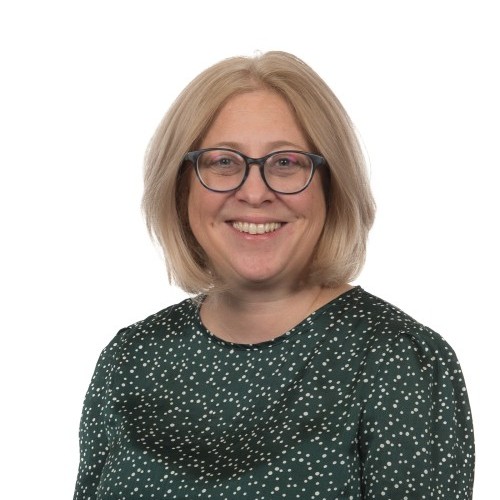
Sophie Camburn
Director, UKIMEA advisory services leader, Arup, UK
Sophie Camburn is a director and Arup’s UKIMEA advisory services leader. She works with public- and private-sector clients on complex place, infrastructure and organisational challenges, bringing together strategy, delivery and cross-sector collaboration. Sophie is project director for Arup’s People. Place. Health. research, which explores how prevention can move beyond the health system and become embedded in the way we shape communities, investment and places. Her work focuses on translating ambitious policy and strategy into practical models for implementation, with a particular interest in regeneration, infrastructure and place-based outcomes.
Jamie Tucker
Associate – cities, planning and design
Making prevention deliverable: Building a place-based model for health
Abstract Copy
If prevention cannot be delivered by the health system alone, how can we connect the expertise, investment and place-shaping powers needed to accelerate it? The case for prevention is well established. The opportunity now is to connect and accelerate the work already underway.People’s health and economic prospects are profoundly shaped by the places in which they live. Health and prosperity therefore need to be pursued as one shared mission, with stronger connections between the organisations, investment and decisions that shape both.
Moving beyond the case for prevention, this discussion will explore how a place-based approach could work in practice. It will consider how existing governance, partnerships and delivery capabilities can be built upon and better connected, avoiding duplication and enabling more co-ordinated action. The discussion will examine how expertise and investment from across health and place can be focused more deliberately on preventative outcomes.
Using Hucknall, Nottinghamshire, as a worked place-based scenario, participants will explore three themes:
• Progress and barriers: what is working already and what is holding back wider adoption?
• Priorities and mobilisation: where to focus first and how to bring the necessary organisations together.
• Practical enablers: the changes needed across funding, policy, governance and asset alignment.
Chaired by Dr Helen Howson of the Bevan Commission, participants will help test and strengthen the proposed delivery model, identify the decisions required to apply it in practice, and shape the next phase of the People. Place. Health. programme. They will leave with transferable insights for their own organisations and places, together with potential opportunities for continued collaboration and real-world testing.

Wednesday 21 October
Building healthy communities: Delivering the right infrastructure at the right time
10.30 - 12.00
Building healthy communities: Delivering the right infrastructure at the right time
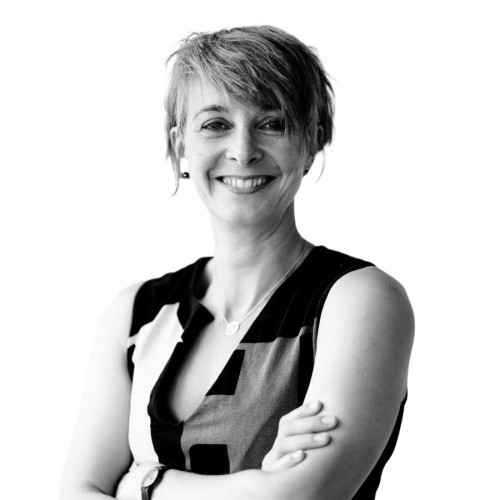
Jenni Montgomery
Business development director, Stantec, UK
Jenni Montgomery is business development director at Stantec.
Building healthy communities: Delivering the right infrastructure at the right time
Abstract Copy
As the UK delivers new communities and regenerates existing places, expectations of what makes a healthy, thriving neighbourhood are evolving. Communities need access to green infrastructure, social spaces, active travel networks, and opportunities for connection from the outset.The challenge is that communities grow and change over time. New settlements often require facilities before demand is fully established, while regeneration projects must respond to changing demographics, evolving service models and new patterns of activity. Against a backdrop of viability pressures and constrained public funding, delivering the right infrastructure at the right time has never been more complex.
This roundtable will bring together senior leaders from across the public and private sectors to explore practical solutions to one of the biggest challenges facing new communities and regeneration projects.
Through a candid discussion on delivery models, flexible infrastructure and health-led regeneration, participants will explore how health and wellbeing can be embedded into place delivery. The session will examine how infrastructure can be brought forward earlier, how community assets can adapt as places mature, and how health can help drive regeneration, resilience and long-term social and economic value.

Healthier places by design: Aligning regeneration, infrastructure and investment
12.30 - 14.00
Healthier places by design: Aligning regeneration, infrastructure and investment
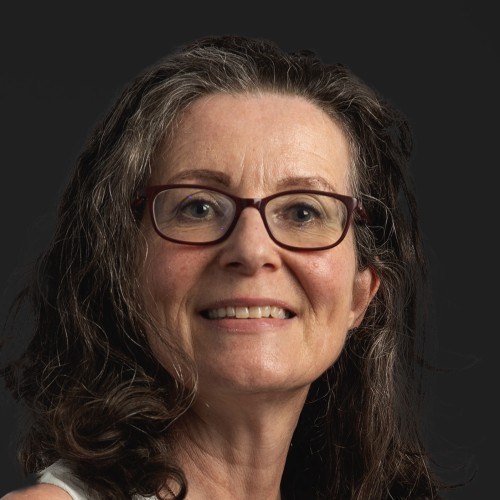
Clare Wildfire
Global cities lead, Mott MacDonald, UK
Clare is global practice leader for cities at Mott MacDonald. She is passionate about using cross-disciplinary synergy and integrated systems thinking to enable more people to be accommodated in urban areas for less cost, consuming less energy, materials and water, emitting less CO2, and cutting waste, while achieving an enhanced quality of life.
She brings a practical understanding of sustainable development drivers and processes at both macro and micro level, gained through nearly 30 years as a low-energy engineer in the built environment. Combining this with engagement at policy level, she is able to bring insight into the technical, political, financial and behavioural aspects of sustainable development, particularly in areas of energy efficiency and thermal masterplanning in the built environment.
Her role is often to lead stakeholders through a process of objective setting and risk assessment, where her ability to apply clarity and sensitivity in the fast-moving cities area allows decisions to be taken in an informed manner despite a lack of precedent or future certainty. In particular, working for both private-sector developers and city municipalities has given her a valuable understanding of how to align objectives and optimise outcomes.

Kerry Harding
Project director for health buildings, Mott MacDonald, UK
Kerry Harding is a highly experienced project director specialising in strategic healthcare planning and complex estates programmes. With a long career across the NHS, Kerry brings deep expertise in system‑wide transformation, Green Book business cases, and the delivery of sustainable, future‑focused health infrastructure.
At Mott MacDonald, Kerry leads major programmes for community trusts, ICBs and primary care networks. This work spans strategic estates reviews, community diagnostic centres, new models of care, and integrated health hub developments. Kerry also champions the role of neighbourhood health delivery plans, practical, place‑based frameworks that turn strategy into action and embed health into everyday life.
Healthier places by design: Aligning regeneration, infrastructure and investment
Abstract Copy
Health outcomes are shaped as much by place as by healthcare. As city regions pursue regeneration and growth, decisions made by local authorities and infrastructure delivery partners, across transport, development, education, utilities and the public realm, play a critical role in shaping long term health and wellbeing, as well as future demand on the NHS.Building on emerging policies focused on local government’s role in health creation, this roundtable is targeted at local government and the organisations responsible for planning and delivering place-based regeneration and infrastructure. Bringing together senior leaders from across the built environment, transport, development and health, the discussion will explore how regeneration investment can more intentionally support healthier lives.
Grounded in a city region context, the session will focus on what is within the gift of placemakers and delivery bodies to influence, from active travel and accessibility to nature-based solutions and community infrastructure, and how better cross-sector collaboration can help embed health creation into future regeneration planning.