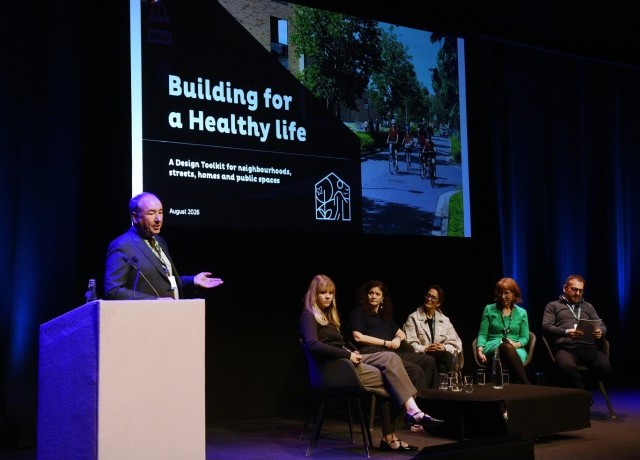
Building for a healthy life – the simple principles for better places
Housing developments risk undermining residents’ health when road engineering and technical requirements overwhelm the ambition to create liveable places, a panel of expert speakers told last week’s Healthy City Design Congress.
David Birkbeck and Amy Burbidge argued that better neighbourhoods depended on keeping people’s everyday experience at the centre of design decisions, from the first masterplan through to construction.
Their talks explored how Building for a Healthy Life – a design toolkit and assessment framework for creating well-designed, sustainable, and healthy residential neighbourhoods, streets, and public spaces in England – could help developers, councils and specialists maintain that shared purpose, bringing together physical activity, nature and social interaction.
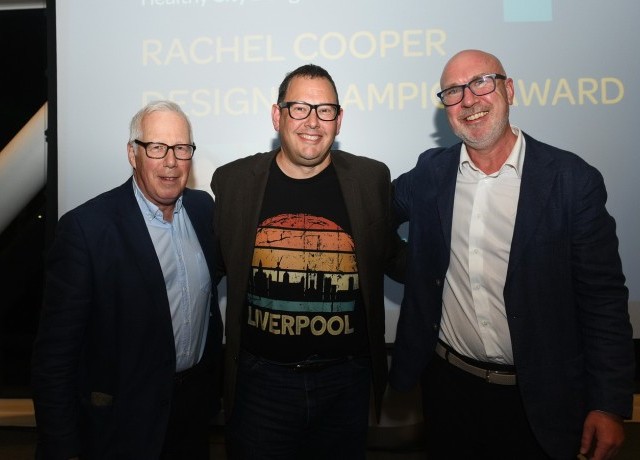
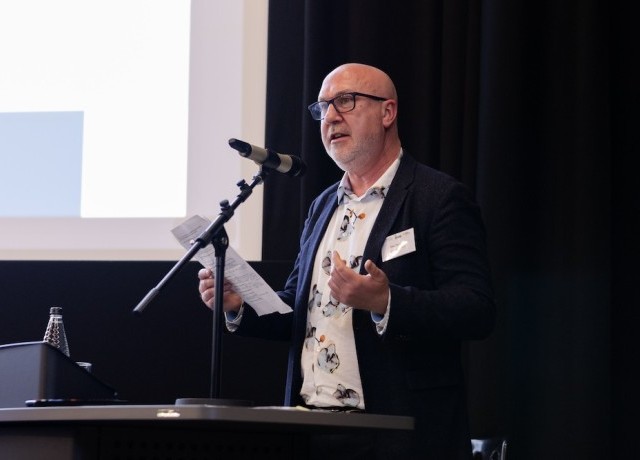
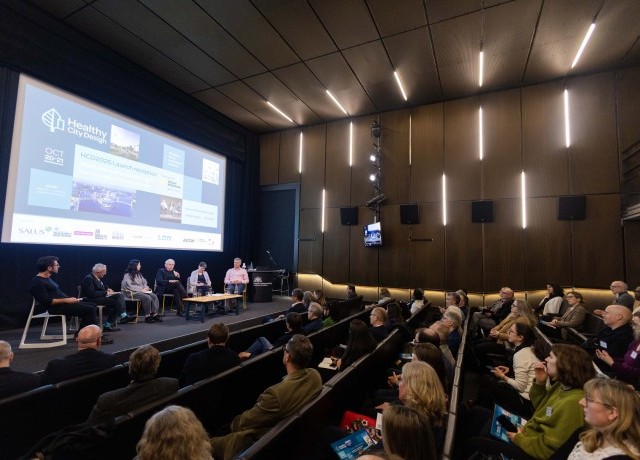
Birkbeck, chief executive of social enterprise Design for Homes (pictured top), described the framework as a “structured conversation”, rather than an exercise in collecting scores. Its traffic-light assessments have helped teams identify weaknesses, discuss constraints and improve proposals before problems became embedded.
Street design illustrates the stakes. While wide junctions and generous turning radii might accommodate large vehicles, they could also encourage faster traffic and discourage residents from walking or cycling. By contrast, tighter corners, continuous cycle routes and comfortable pavements could create streets where people felt able to spend time outside.
Birkbeck also challenged the separation of drainage, play and public space into disconnected parts of a development. Well-designed sustainable drainage could combine water management with attractive landscapes and opportunities for children to play.
Bringing those functions together could use land more efficiently while improving residents’ experience, he suggested.
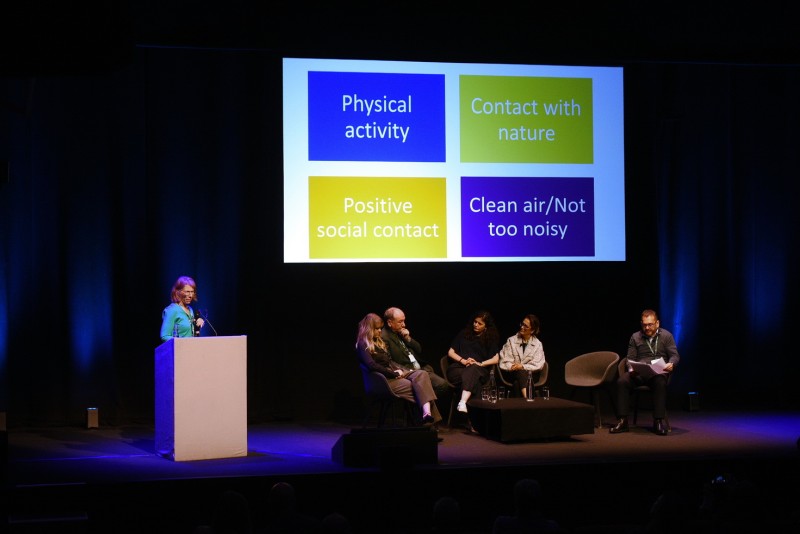 Amy Burbidge, head of design and master development from Homes England
, framed the objective around enabling physical activity, contact with nature and positive social encounters, alongside cleaner, quieter surroundings. Specialist expertise is essential, she said, but individual requirements could obscure the wider purpose. Teams need to keep returning to the kind of place they aspire to create.
Even modest details mattered. Benches offered an invitation to walk, rest and meet others, while the space between pavement and front door could welcome residents and accommodate planting, seating, bicycles and bins.
Those transitional spaces were often considered too late or were lost through cost-cutting, despite their importance to the character of a street.
The panel discussion reinforced the need to involve the right expertise early and challenge assumptions about cost and maintenance.
Becky Phillips-Melhuish, principal inspector at Active Travel England, questioned whether landscape features were genuinely unmanageable, or whether highway authorities’ approaches to maintaining assets had failed to keep pace with wider thinking about placemaking. Engineers responsible for adopting streets need to help shape proposals from the outset, she asserted.
“Our communities deserve better,” reflected Dr Saira Ali, president of the Landscape Institute, calling for landscape architects to be involved from the beginning. Successful landscape-led schemes consider people, nature and experience together, rather than treating greenery as an addition, she elaborated.
Kelly Hillman, group director – public land and place at Vistry, offered a developer’s perspective, explaining how a scheme’s original vision could become diluted as responsibility passed between planning, technical, commercial and construction teams. The ‘Building for a Healthy Life’ framework could, however, provide a continuing reference point, she observed.
The discussion also highlighted the value of revisiting completed schemes together, acknowledging mistakes and carrying lessons into future projects.
The shared message from the panel was that healthier housing requires more than good intentions on a plan: it depends on protecting the quality of the place throughout delivery.
Event news


Actions to improve urban renewal and health equity
2nd September 2024
A vision for Liverpool: Putting people’s health first
2nd September 2024
Investing in urban renewal and health equity
21st March 2024
Health equity: Marmot Cities
20th March 2024