Call for political action on car dependency to deliver healthier streets
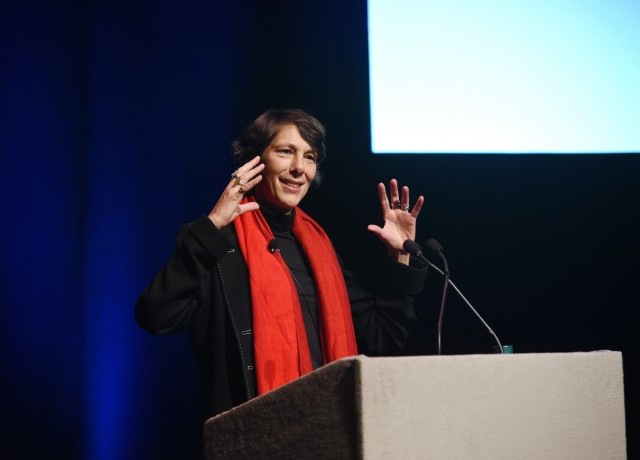
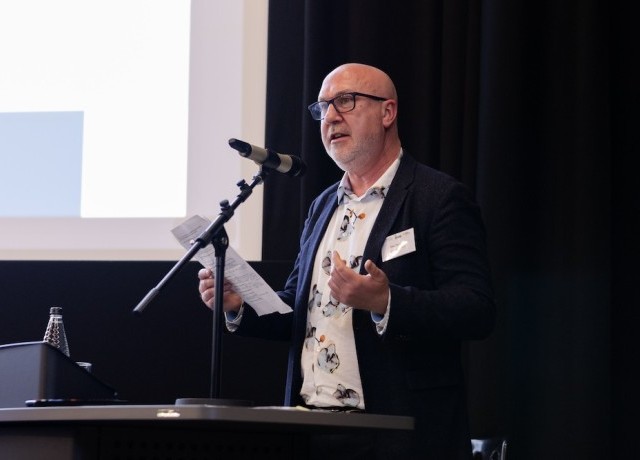
Creating healthier, greener neighbourhoods requires political leaders to confront car dependency, rather than relying on technical improvements alone, Audrey de Nazelle told last week’s Healthy City Design Congress.
The Imperial College London associate professor argued that car culture and the environments built to sustain it were major obstacles to streets where people felt safe, valued and included.
Opening her talk, she asked delegates to imagine a beautiful, inclusive, sustainable neighbourhood, and then raise their hands if their picture included a car. Few did, highlighting a gap between the places people aspired to inhabit and the streets they encountered daily.
De Nazelle said cities already had a range of ways to reduce reliance on cars, including Barcelona’s superblocks, low-traffic neighbourhoods, cycling networks and 15-minute city approaches.
The difficulty was turning those possibilities into action, particularly when proposals became politically contentious.
She identified three connected areas requiring attention: institutions, politics and the evidence used to inform decisions. Better collaboration mattered, but so did recognising the interests and cultural assumptions that sustained existing transport systems.
Fragmented decision-making, she argued, encouraged cities to treat related problems separately. Road safety teams installed railings, health programmes promoted exercise, climate policies encouraged electric vehicles, and urban greening projects sought space on walls and roofs.
Reducing the space devoted to cars could address several of those challenges together, opening opportunities for walking, cycling, planting and social interaction.
De Nazelle described modelling studies examining the health effects of alternative transport policies. Replacing conventional vehicles with electric ones could bring benefits through lower air pollution, but shifting journeys towards walking, cycling and public transport could deliver additional gains through physical activity.
Reallocating parking space to greenery could also support cooling, biodiversity and stormwater management, with opportunities to address inequalities if schemes were planned carefully.
Such evidence, she suggested, could help different departments recognise shared objectives and build alliances around health, sustainability and equity. However, she also warned that collaboration was not automatically effective. Networks could blur responsibility, while formal arrangements risked adding administrative work without securing action.
Health needed to become an explicit goal, supported by clear responsibilities, targets and monitoring, rather than simply another argument used to promote a scheme.
Ultimately, de Nazelle said, politicians needed to make ambitious decisions, including potentially controversial choices to reduce traffic.
She also highlighted misinformation as a barrier, describing how misleading claims could generate anxiety, spread rapidly and erode trust. Some reflected deliberate manipulation, while others arose from deeply embedded assumptions that prioritised driving. Those cultural norms, she argued, could shape debate so thoroughly that people failed to recognise them.
Her message was that evidence and positive visions remained essential but would not be sufficient on their own. Delivering healthier neighbourhoods also meant engaging with the politics of street space: who it served, whose interests shaped decisions, and whether leaders were prepared to challenge the expectation that cars should dominate.
Event news



Actions to improve urban renewal and health equity
2nd September 2024
A vision for Liverpool: Putting people’s health first
2nd September 2024
Investing in urban renewal and health equity
21st March 2024
Health equity: Marmot Cities
20th March 2024