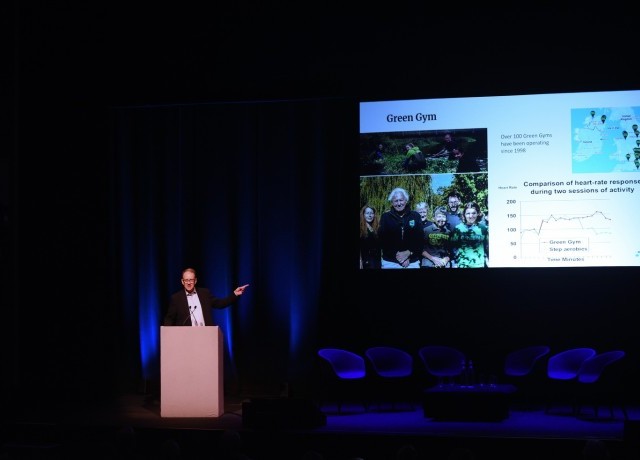
Green spaces need a sense of belonging to deliver better health, GP argues
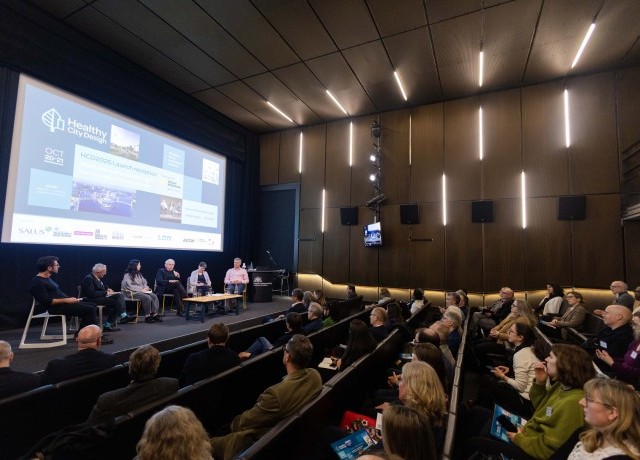
Building parks and green spaces will not deliver their full health benefits unless people feel safe, welcome and connected to them, Dr William Bird told last week’s Healthy City Design Congress in Salford, Greater Manchester.
The GP, who is chief executive of Intelligent Health and a member of the Test, Learn and Grow team for neighbourhood health at the UK Cabinet Office, argued that creating healthier places required more than providing physical infrastructure. Designers and policymakers also needed to understand how people experienced their neighbourhoods, and what encouraged or prevented them from using outdoor spaces.
His central message was that people needed to feel safe, valued and that they belonged. Without those foundations, even a nearby park could remain somewhere residents felt unable or unwilling to visit.
“Green space doesn’t raise life satisfaction simply by its physical presence,” he said.
Bird traced that thinking back to his work as a young GP in South Oxfordshire, where patients with diabetes repeatedly struggled to become more physically active. Rather than continuing to prescribe the same advice, he brought patients together and asked what was stopping them enjoying the outdoors. Women described concerns about safety, while men worried about getting lost or managing stiles when they had painful joints.
The response was to organise regular walks with trained leaders, helping establish health walks in 1996. Conservation activities through the Green Gym followed, offering participants a practical purpose alongside exercise.
For Bird, the appeal of this approach illustrated a weakness in conventional health promotion. People might be motivated less by fitness targets than by making friends, improving a local habitat or contributing to something worthwhile. Physical activity could, in this way, become a benefit of an enjoyable, meaningful experience.
He linked that approach to a wider account of chronic stress, explaining how persistent feelings of insecurity and exclusion could affect health. Supportive relationships and welcoming environments, he argued, should therefore be treated as foundations of health creation.
Bird also described work by Intelligent Health, using the Beat the Street game to encourage communities to explore their neighbourhoods. Participants tap cards at boxes installed around an area, with children helping draw families into the activity. He described the game as a catalyst for people to connect with one another and with local places.
The resulting data, he said, helped reveal differences that conventional measures of access could miss. Residents living close to the same park might have sharply different views about whether it was welcoming or intended for them.
He highlighted associations between park use, physical activity and life satisfaction, while cautioning that these did not prove the park itself caused the improvements.
The implication for design was to combine information about deprivation and physical access with residents’ lived experience. Proximity alone could not explain whether a space supported health.
Bird urged delegates to begin with people: understand their concerns, involve them in shaping local spaces and create reasons to spend time outdoors together. The measure of success was not simply whether a green space existed, he asserted, but whether communities felt it belonged to them.
Event news

Actions to improve urban renewal and health equity
2nd September 2024
A vision for Liverpool: Putting people’s health first
2nd September 2024
Investing in urban renewal and health equity
21st March 2024
Health equity: Marmot Cities
20th March 2024