Activating population health: Beyond infrastructure to relational health-creating systems
Dr William Bird shows how integrating “hardware” (physical infrastructure) and “software” (community activation and lived experience) can operationalise a health creation approach to population health.
Abstract
Introduction: Urban strategies to improve population health traditionally focus on physical infrastructure, assuming these will translate into behaviour change and improved wellbeing (Smith et al., 2017). Persistent inequalities in physical activity and health outcomes suggest that infrastructure alone is insufficient (Jones, S.M., 2024). A growing body of work argues that health is created through ecological, relational, and place-based systems shaped by everyday social environments (De Jesus et al., 2010; Jones, S.M., 2024). Feelings of safety, belonging, and connection are consistently linked to better wellbeing. Asset-based approaches emphasise the need for relational infrastructure to create health (Russell, 2025).
Purpose: We show how integrating “hardware” (physical infrastructure) and “software” (community activation and lived experience) can operationalise a health creation approach to population health.
Methods: Data were drawn from the Beat the Street (Harris & Bird, 2020) programme in Barnsley, UK, activating 22,297 participants. Gamification encouraged participation, repeat engagement, and behaviour change. Population-level data was collected including behavioural (e.g. trips, activity), attitudinal (e.g. safety, confidence), and experiential measures of place, connection and participation. Novel walkability and cyclability indicators integrated lived experience with spatial data to inform strategy. Findings are interpreted within a conceptual framework of health creation using the Health Creation Index (HCI).
Results: The intervention achieved high and inclusive participation (66 per cent from the 40 pe cent most deprived communities), generating over 115,000 miles walked or cycled, with increased adult walking (+19.3 per cent) and reduced child car use (–14.8 per cent). Walkability and cyclability varied by population and place, with clear differences between adult and child experiences. Behaviour was more strongly associated with perceived safety, confidence, and social permission than with infrastructure alone. HCI analysis showed higher health creation conditions were necessary for enhanced physical activity and wellbeing benefits. Children in more supportive environments showed substantially higher wellbeing, with activity most beneficial where these conditions were present.
Implications/Conclusions: Population health depends on integrating physical and relational systems. In Barnsley, this “software” layer generated actionable insight to inform more effective “hardware” decisions, directly shaping transport and active travel priorities across Barnsley and the South Yorkshire Mayoral Combined Authority, including investment targeting, neighbourhood and school-based interventions, and embedding equity. It also supported alignment across transport, placemaking, and health strategies. We conclude that a health creation approach – prioritising safety, belonging, and agency – offers a practical and transferable framework for translating infrastructure into equitable improvements in behaviour and wellbeing.
Learning objectives
- Understand the limitations of infrastructure-led approaches to population health and the role of relational and place-based systems in shaping behaviour and wellbeing.
- Explain how integrating “hardware” (physical infrastructure) and “software” (community activation and lived experience) operationalises a Health Creation approach at population scale.
- Apply insights from population-level and lived experience data to inform more equitable planning, active travel investment, and cross-sector decision-making.
Presenters
Co-authors

Event news

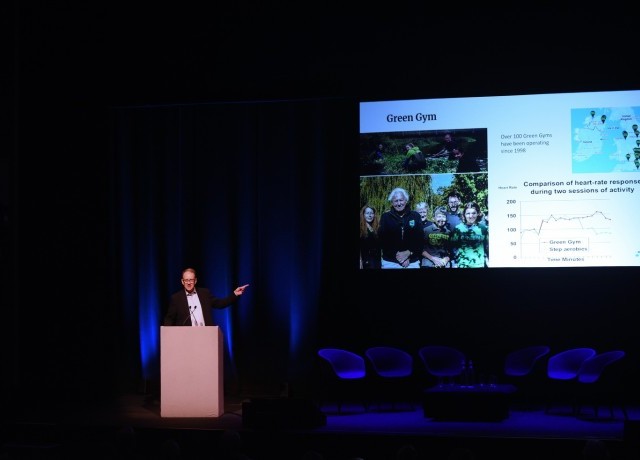

From hyperturbulence to hope: Creating a healthy society
11th November 2026
The road to 2027: The next Healthy City Design destination
11th November 2026
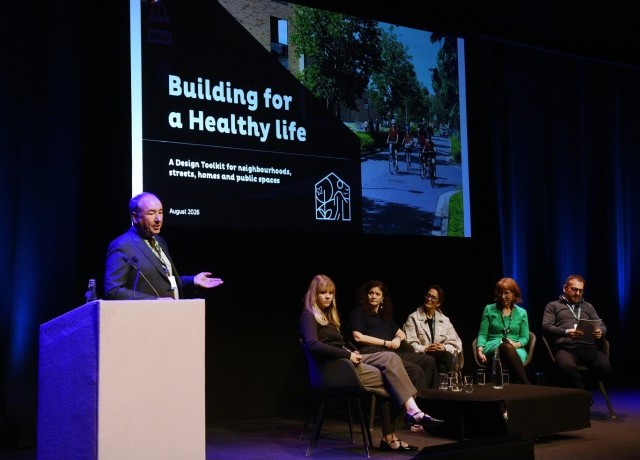
Building for a healthy life: Simple principles for better places
11th November 2026
Prototyping the high street integrated care hub (HICH)
2nd November 2026